My downstairs neighbor likes to host Thanksgiving (in the form of Friendsgiving) every year; she provides the turkey, gravy, and cranberry sauce, and a collection of others bring veggies and sides. I typically bring a vegetable (this year I roasted our combined stash of Brussels sprouts), at least one dessert (this year was creme brûlée with caramelized apples at the bottom of the dish), sometimes an appetizer (I made cheese puffs but then left them in my freezer; we’ll have some with wine later this week), and bread. This year I thought I would combine some recipes from the sourdough section of King Arthur’s new Big Book of Bread and an episode of The Great British Baking Show, specifically the episode where Paul Hollywood demonstrates a seven-strand braided ring. That is, rather than using Paul’s formula, I thought I’d use a sourdough formula that had approximately the same weight of flour. There was another formula nearby in the book, which I thought would be a way to use the rest of my discard. Both formulae called for unfed starter, so I thought at least one would work, and I could use the rest of any dough for rolls or a formed loaf or whatever.
This link shows what the finished loaf is supposed to look like. This, however, is what my dough actually looked like:
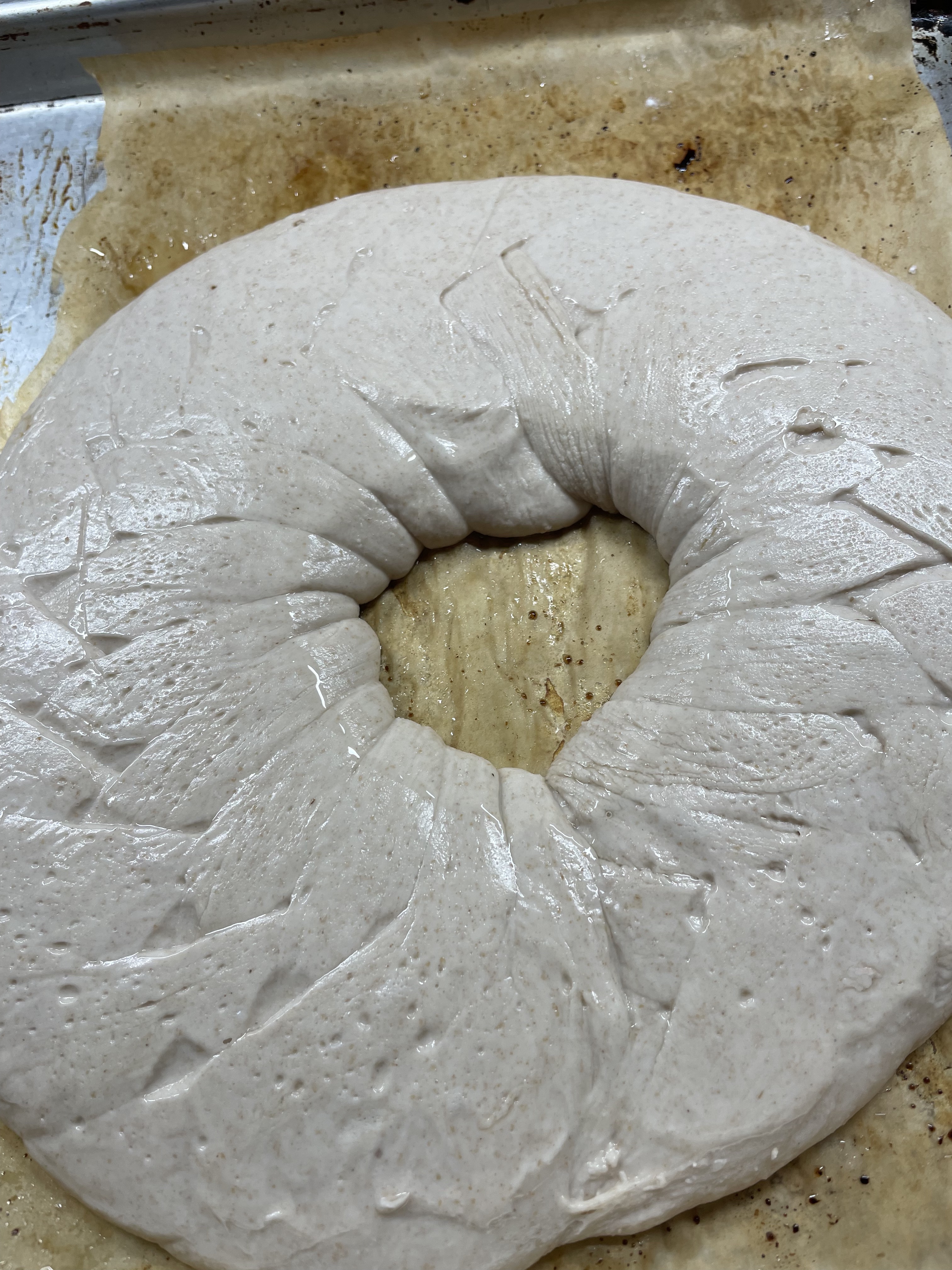
And the other formula? The “safety” formula? No better:
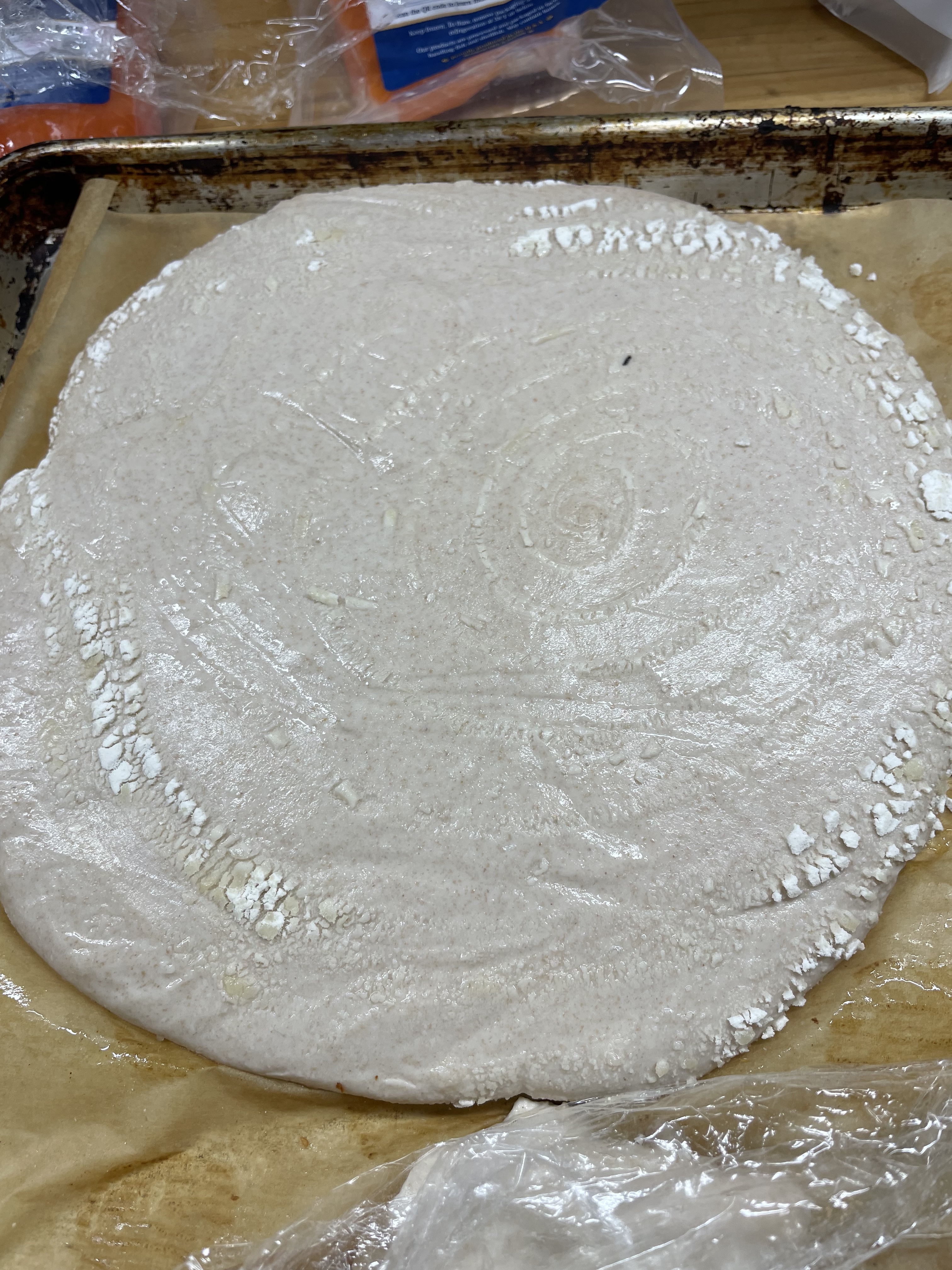
I tried to bake some of the sourdough dough as rolls, but they came out like dense little slightly raised pancakes. The flavor actually isn’t terrible, but the texture is quite bad. They’ll still get consumed, but, oof, definitely a failure.
Because of all of this fail, on Thanksgiving day, I whipped up another batch of rolls from another King Arthur baking book; the recipe used yeast instead of my starter, and they came out just fine. Quite nice, in fact, with a lovely sweetish taste from the whole wheat. I only made two substitutions. First, I didn’t have any rye flour, so I just used more whole wheat. Second, I didn’t have either orange juice or an orange, but I did have some orange sugar (orange rind mixed with sugar, which I had in the freezer as the leftovers from some other experiment), so I subbed in some orange sugar for both the juice and some of the honey the recipe listed. It provided a subtle tang and sweetness that complemented the whole wheat flour nicely.
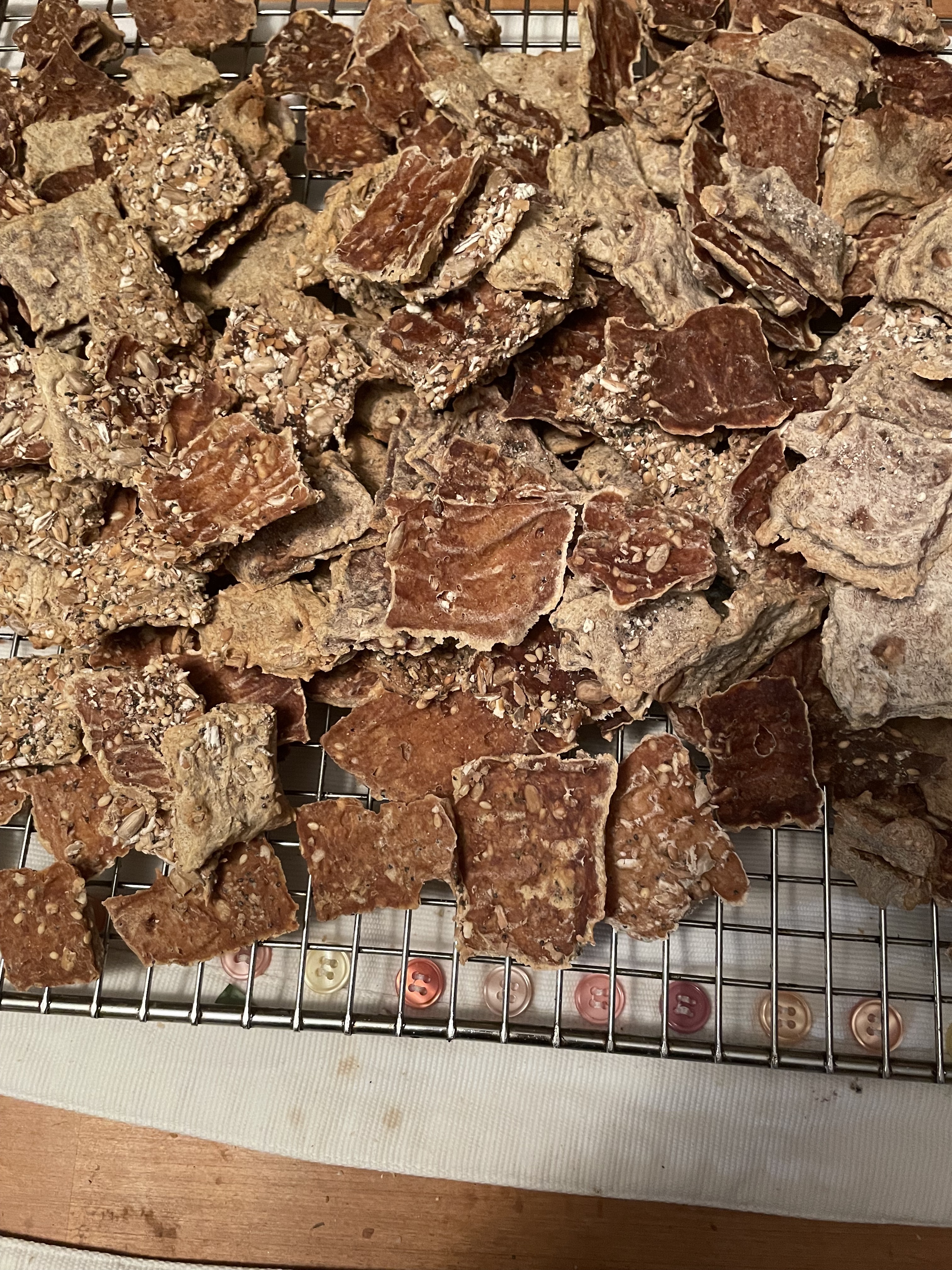
I put the two sheet pans of failure dough in the fridge, covered with greased plastic wrap, and figured I’d come back to it on Friday, though I had no idea what I was going to do with the massive quantities. I really did not want to throw it out; way too much flour was involved, and it seemed like such a waste. Finally it came to me: crackersI’ve seen recipes that basically just use sourdough discard for crackers (though I haven’t tried that), and I’ve made my own crackers using Peter Reinhardt’s formula from his whole-grain baking book. I also had a bunch of King Arthur’s Harvest Grains Blend, because it’s a good shorthand add-in when I want to add something to a basic loaf or to waffles or pancakes.
I tried multiple methods along the way—kneading some of the grains into the dough, then rolling it out as thin as possible; rolling it out and then rolling the grains into the dough that way; and, finally, doing the latter and adding some olive oil on top. The first pan didn’t bake very well; one side got brown but the other did not. I kept going, though, and made sure I baked everything through. As you can see here, even crackers that are baked through aren’t necessarily brown on both sides. But! They’re tasty, and crunchy, and I didn’t have to throw out all of that Faildough.
My biggest takeaway—which, frankly, I already knew but somehow keep thinking is going to change by magic—is that my starter isn’t very strong and needs to be built up to use it. It works just fine for my two most common uses, waffles and pizza dough, but if I want to bake bread with it, I really need to build it up before I use it.
 Just Bite Me Blog